How Pathogenic Bacteria Build Pili
You are here
The Clubb Lab uses multidisciplinary approaches to uncover how Gram-positive bacterial pathogens build pili and other surface structures that allow them to attach to tissues, form biofilms, and evade immune defenses. This research provides insight into bacterial virulence and lays the groundwork for developing therapies to combat antibiotic-resistant infections.
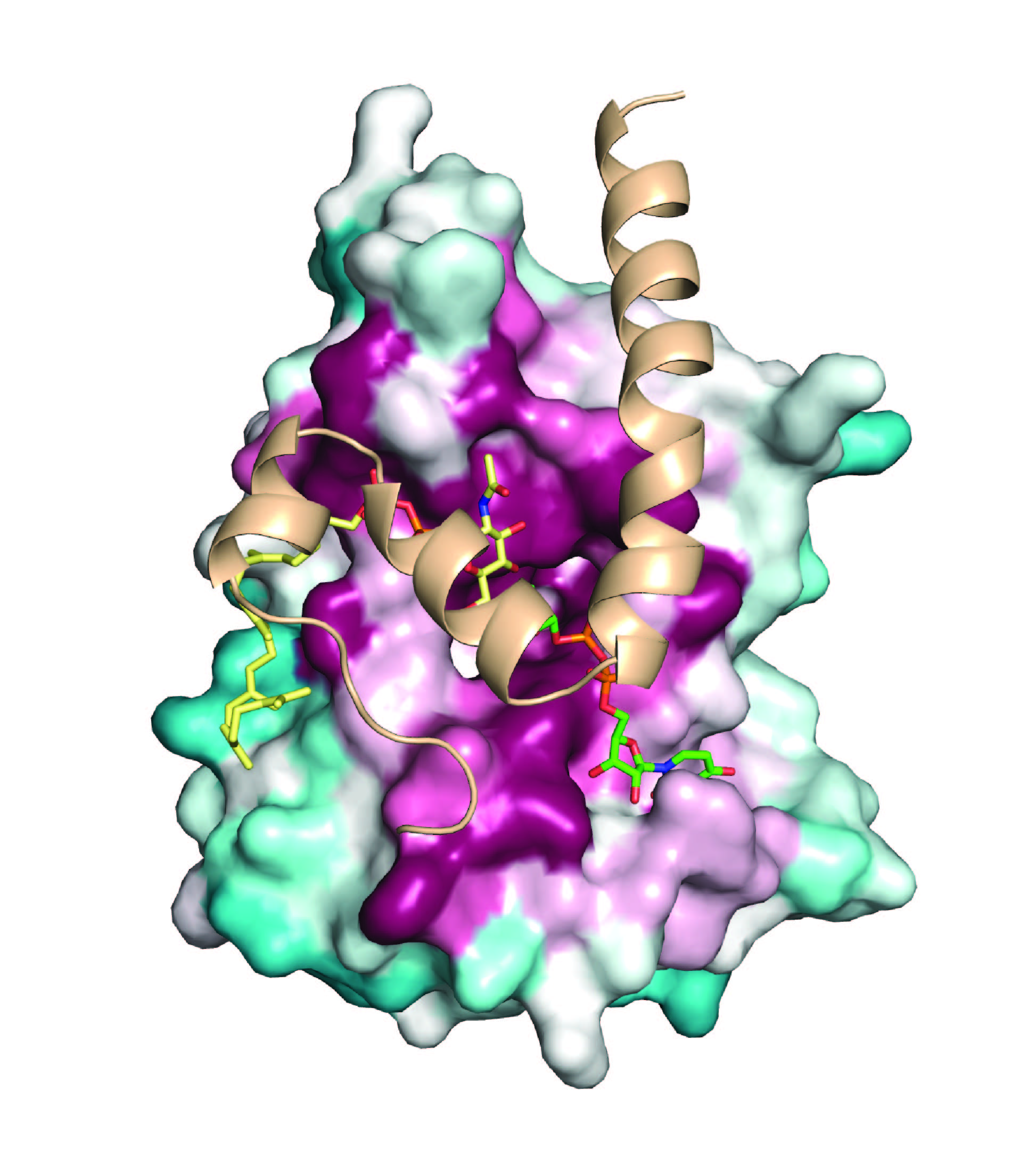
A central focus of our research is pili—hair-like protein filaments that act like grappling hooks, enabling bacterial pathogens to attach to host cells, abiotic surfaces, and other microbes. Pili in Gram-positive bacteria are built with remarkable precision by specialized enzymes that select and link the appropriate pilin proteins in a specific order. Some pilins can also form shorter pili or crosslinked dimers, creating a variety of surface structures that strengthen attachment and help pathogens adapt to different environments. These structures are critical for the survival and virulence of many pathogens, including E. faecium, S. pneumoniae, and C. diphtheriae.
By combining cryo-EM, high-throughput assembly assays, and computational modeling, we are uncovering the molecular mechanisms that guide pilus assembly. Understanding these processes provides a blueprint for how pathogens display critical virulence factors and lays the foundation for novel therapeutics that could disarm antibiotic-resistant pathogens by targeting their pili.
Relevant publications:
Gosschalk JE, Wu C, Sue CK, Kattke MD, Yi SW, Damoiseaux R, Jung ME, Ton-That H and Clubb RT. A cell-based screen in Actinomyces oris to identify sortase inhibitors. Scientific Reports 10 2020; 85202.
Chang C, Wu C, Osipiuk J, Siegel SD, Zhu S, Liu X, Joachimiak A, Clubb RT, Das A and Ton-That H. Cell-to-cell interaction requires optimal positioning of a pilus tip adhesin modulated by gram-positive transpeptidase enzymes. Proceedings of the National Academy of Sciences (USA) 116 2019; 18041-18049