Decoding Microbial Machines
You are here
The Clubb Lab at the UCLA–DOE Institute for Genomics and Proteomics studies how bacteria build and control cellulosomes—large enzyme complexes that efficiently break down plant polysaccharides. These systems are central to microbial carbon use and have broad relevance to bioenergy, biotechnology, and the human gut microbiome.
Our work reveals how cellulolytic bacteria dynamically tailor cellulosome composition in response to environmental cues through membrane-embedded cell-surface receptors that sense extracellular carbohydrates and transmit signals via sigma factor–based transcriptional programs. Structural and biophysical analyses show that these receptors adopt highly extended architectures that project carbohydrate-binding modules far from the cell surface. We further defined the molecular basis of signaling, demonstrating that conserved extracellular domains undergo auto-proteolysis near the membrane to prime receptors for regulated intramembrane proteolysis. Polysaccharide binding initiates proteolytic cascades that release sigma factors and activate cellulosomal gene expression, indicating that auto-proteolysis–coupled signaling is a broadly conserved strategy for bacterial biomass sensing.
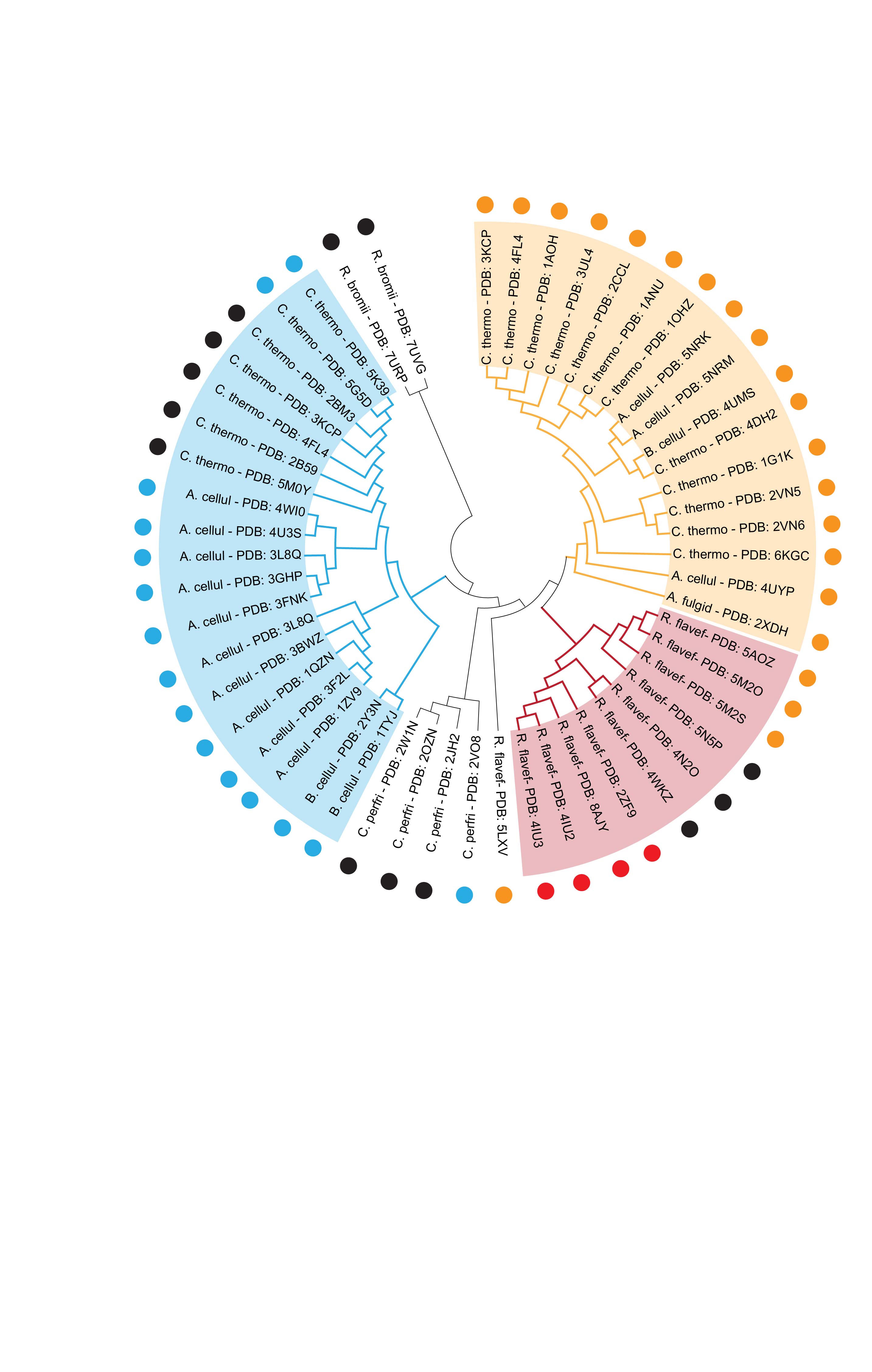
Most recently, we have used large-scale genomics and structural proteomics to define the diversity and evolution of cellulosome systems. Comparative analysis of hundreds of thousands of bacterial genomes revealed both conserved and divergent cellulosome architectures and identified many previously unrecognized cellulosome-producing species. Proteome-wide AlphaFold-based structural predictions further uncovered extensive cellulosome diversity within the Ruminococcus genus, including human gut symbionts whose cellulosomes are invisible to sequence-based annotation. Structure-based clustering revealed novel cohesin families and unexpected enzyme repertoires, including assemblies specialized for degrading resistant starches in the gut.
Collectively, this work defines fundamental principles governing the diversity, architecture, and regulation of cellulosomes, advancing our understanding of microbial biomass deconstruction and informing the development of sustainable bioenergy and bioproduct platforms.
Relevant publications:
Minor C, Takayesu A, Arbing MA, Ha S-M, Gunsalus RP, Pellegrini M, Sawaya MR, and Clubb RT. AlphaFold-Driven Structural Proteomics Reveals Extensive Cellulosome Machinery in Human Ruminococcal Symbionts. (submitted)